 Loading... Please wait...
-
Call us on (973) 810-2976
- My Account
- Gift Certificates
- Items / $0.00

All prices are in All prices are in USD
Categories
- Home
- Identified Artifacts
- 18th century Dealf plate from the Qianlong period, circa 1736 – 1750
- Home
- Non-excavated Artifacts
- 18th century Dealf plate from the Qianlong period, circa 1736 – 1750
- Home
- Personal Items
- 18th century Dealf plate from the Qianlong period, circa 1736 – 1750
- Home
- Late 18th Century / Early 19th Century
- 18th century Dealf plate from the Qianlong period, circa 1736 – 1750
- Home
- Revolutionary War items
- 18th century Dealf plate from the Qianlong period, circa 1736 – 1750
- Home
- Antiques from the 18th and 19th century
- 18th century Dealf plate from the Qianlong period, circa 1736 – 1750
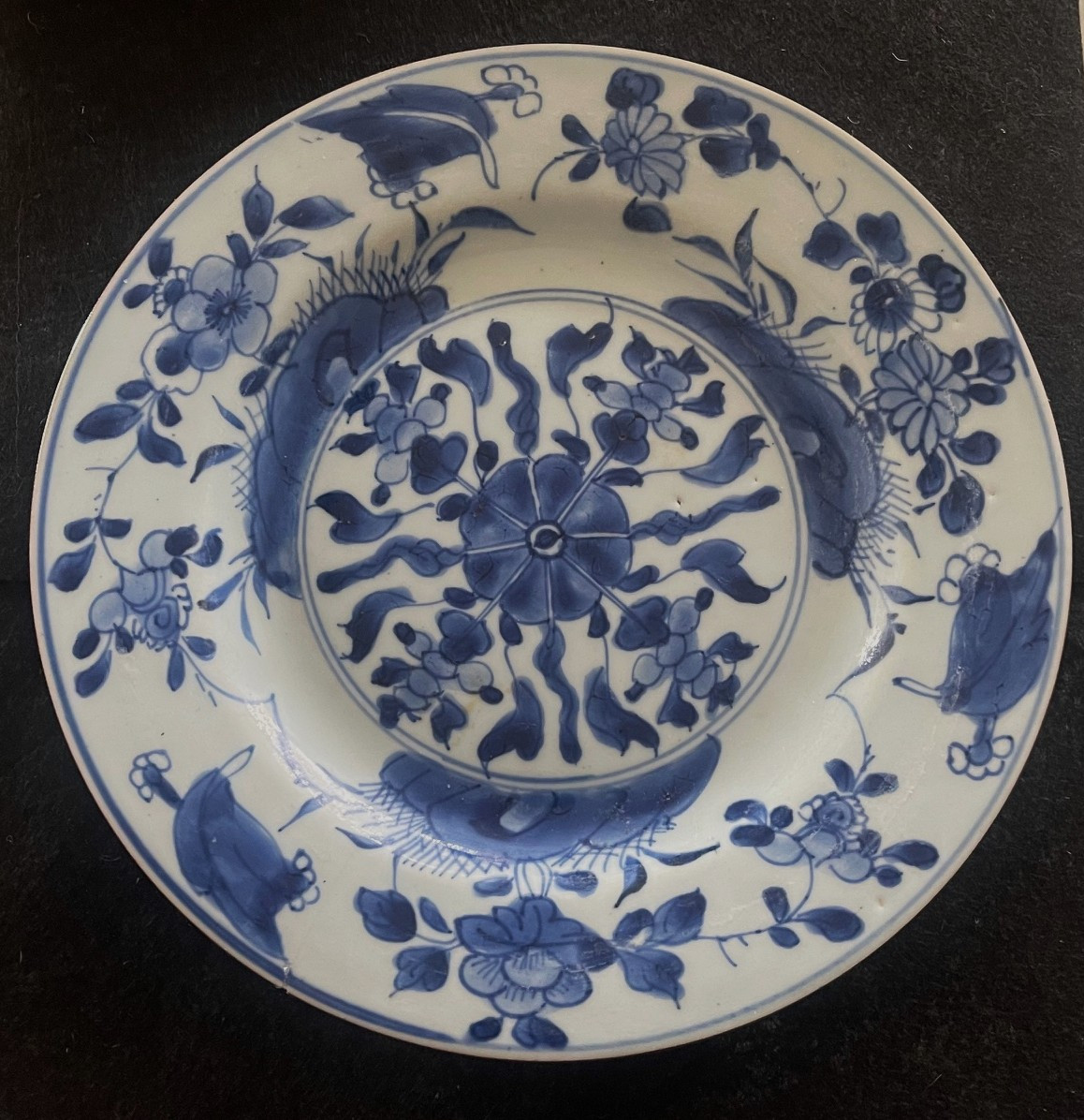


18th century Dealf plate from the Qianlong period, circa 1736 – 1750

Out of Stock
Product Description
Being offered is a beautiful Chinese porcelain plate from the Qianlong period. The Qianlong period spanned from 1736 to 1795, marking the reign of the Qianlong Emperor during China's Qing Dynasty. It has a diameter of 9” with a great blue pigment, generally cobalt oxide.
Delftware eating plates were used in the American colonies during the Revolutionary War period, though they were rapidly being replaced by newer, more durable ceramics. Throughout the 17th and 18th centuries, delftware (tin-glazed earthenware) was the most common type of ceramic export to the American colonies.
In the 18th century, such colorful dishes were often made from porcelain imported from China or replicated by European manufacturers. Similar examples can be found in "Collector's Illustrated Encyclopedia of the American Revolution" by Neumann & Kravic, the Colonial Williamsburg Museum, and the Fort Ticonderoga Museum (see pictures).
This dish is in excellent condition, with no chips or cracks, making it a valuable addition to any Colonial or Revolutionary War collection. Shards of these dishes are often found at military sites validating their use during the war. Original dishes in this condition are rare and highly sought after by collectors.
Throughout history, war has been a constant presence, shaping civilizations and societies. From the earliest days of humanity, conflict has persisted in various forms, and based on historical patterns, it is likely to continue in some manner. This ongoing reality has given rise to a deep fascination among historians and collectors who seek to understand the past through the tangible remnants left behind, i.e. uniforms, guns, swords, artillery.
While significant attention is given to weapons and military gear, the everyday items used by soldiers frequently go unnoticed. Simple objects like forks, spoons, cups, dishes, pots, and knives played an essential role in a soldier’s daily life. These items were as precious to the individual as their weapon, serving practical needs and providing comfort amidst the hardships of war. I myself have always appreciated their importance in showing a complete representation of a collection.
Product Reviews
)